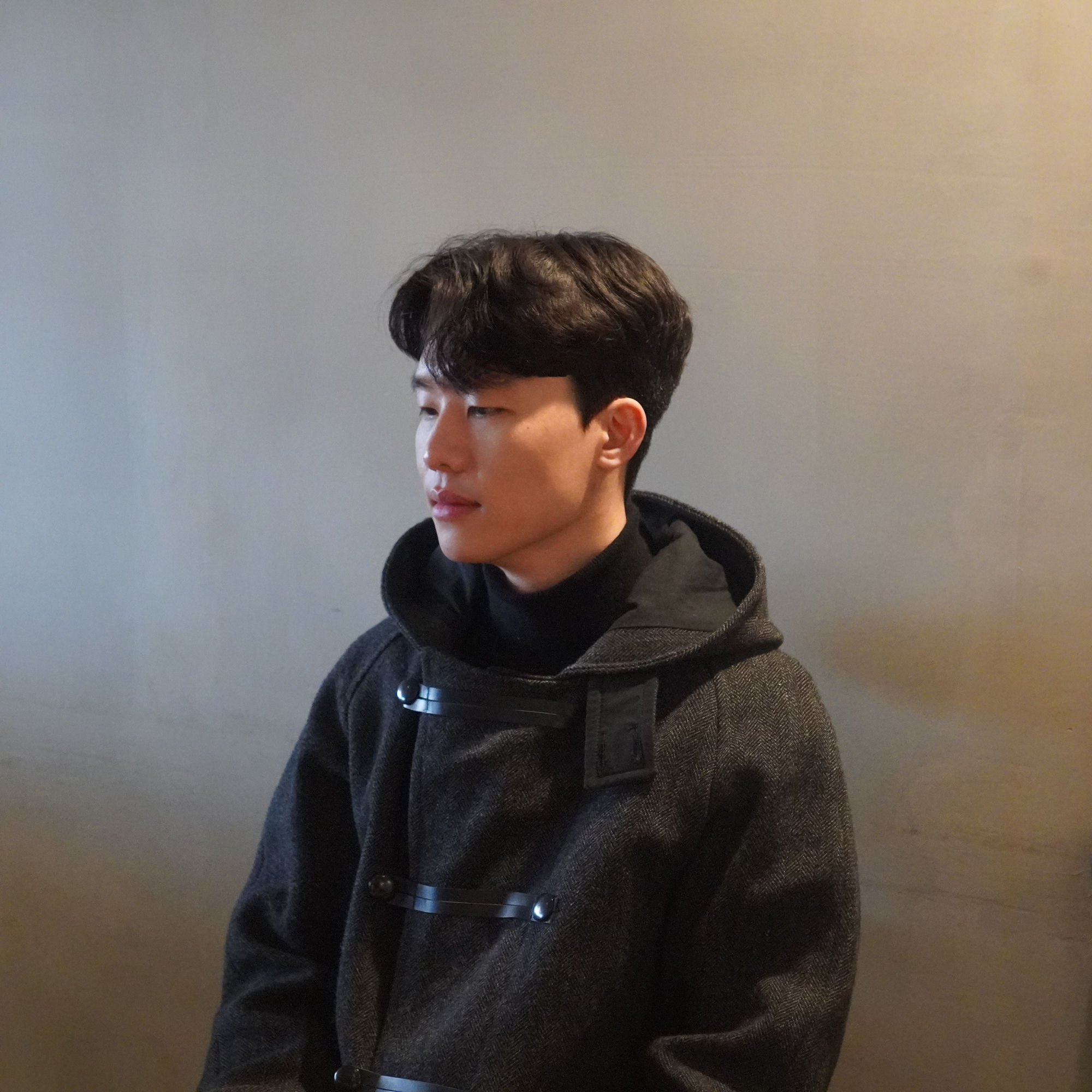
Sungpil Wang Text AI · NLP · Computational Humanities
An NLP researcher who builds language-model pipelines end to end.
I research and share knowledge in Text AI, NLP, and Computational Humanities.
I analyze and generate text across many domains — literature, law, and broadcasting.
Research
Selected and ongoing work
Narrative Structure in Flash Fiction
Analyzed the sentence-level flow of meaning in Korean flash fiction to reveal five narrative types and a recurring pattern of stories breaking and then leaping forward.
Prose Poetry vs. Flash Fiction
Showed that prose poetry and flash fiction can be told apart purely from the shape of their trajectory through meaning space, with every genre cue removed.
Flash Fiction Generation Agent
Built a pipeline in which a Korean language model writes flash fiction and an agent reviews and rewrites its own output.
Narrative Structure and Story Retrieval
Ran controlled experiments on whether the structure used to summarize a story affects how well it can be retrieved.
Broadcast Speech Transcription
Built a pipeline that separates speech from 15 TV and radio channels and transcribes it to text, designed to stay reliable even when music and noise overlap. (KOCCA)
Word–Color Association
Developed a way to measure how strongly words associate with colors from large-scale web images, validated on the world’s top 100 brands and color symbolism in 20th-century Anglo-American poetry.
Legal Network Analysis
Modeled the entire body of Korean law (1948–2024) as a network and classified citations as reinforcing or conflicting, showing that legal coherence declined as special laws proliferated in the mid-2000s.
Topics in Korean Prose Poetry
Applied topic modeling to contemporary Korean prose poetry and tested which topics remain stable under changing conditions.
Evolution of Seo Jeong-Ju's Poetic World
Analyzed 950 poems by Seo Jeong-Ju through keywords, topics, and sentiment, quantifying when the “Silla spirit” took hold and how his tone turned positive after 1975. (DH2022)
Dancing Bbongsa: XR Co-op Dance Game
Led the user-perception study for an XR co-op dance game, analyzing 12,000 news articles about dancing to surface how public perception differs and to inform the game’s direction. (HCI Korea 2024)
Spiritfarer & Coping with Loss
Studied how the death-themed game Spiritfarer helps players cope with loss, using in-depth interviews to trace how grief oscillates between loss and restoration. (CHI EA 2021)
Books
Contributed to


Projects & Grants
Funded research projects
- 2023.07 – 2025.12
Project Manager (Participating Org.) · Korea Creative Content Agency (KOCCA)
Broadcast monitoring technology for royalty settlement of literary and artistic works
- 2023.06 – 2026.05
Researcher · National Research Foundation (NRF)
Network-science analysis of legal information for understanding law and development in the post-AI era
- 2022.03 – 2025.02
Researcher · Korea Institute for Advancement of Technology (KIAT)
VR/AR specialist training program (RCMS)
- 2021.08 – 2023.12
Project Manager, Lead Org. (2023) · Korea Advanced Institute of Science and Technology (KAIST)
Imagining post-AI culture technology
- 2023.07 – 2023.12
Researcher · National Information Society Agency (NIA)
Korean text–video–sound multimodal dataset
- 2022.02 – 2022.12
Researcher · National Cyber Security Lab (NCSL)
AI-based video summarization and captioning
- 2021.05 – 2021.12
Researcher · National Information Society Agency (NIA)
Video and image editing technology dataset (No. 26)
- 2020.09 – 2020.12
Researcher · National Information Society Agency (NIA)
Emotion-recognition and video-summarization AI dataset (No. 35): public DB, training pipeline, and applications
Awards & Selections
Competition awards and competitive selections
- 2026.08
Grand Prize (KAIST President's Award)
2026 KAIST AI×Failure Idea Competition · KAIST Center for Ambitious Failure
"The Cost of Erasing AI from the Definition of Art" — a pre-mortem of failures caused by binary AI labeling of hybrid art
- 2026.08
Grand Prize
2026 KAISTian Failure Essay Contest · KAIST Center for Ambitious Failure
"Papers That Could Not Even Be Rejected" — an essay on interdisciplinary work that cannot find a venue (theme: Future and Failure)
- 2026.07
Selected — Top 100, AI Agent-Based Solo Founder Program
2026 KAIST OverEdge · KAIST Startup Center · KAIST AI Graduate School
- 2019.08
Encouragement Award, Idea Planning Track (Korea East-West Power CEO's Award)
The 7th Public Data Utilization Business Idea Contest · Ministry of Trade, Industry and Energy
"Ttarawa" — public-data-driven route navigation and safety information system for Seoul bike-share
Teaching & Talks
- 2025.09 –Lecturer
Applied Digital Humanities (regular course)
Korea University, College of Liberal Arts
- 2024.01Teaching Assistant
2nd Digital Humanities Winter School (special course)
Korea University, College of Liberal Arts
- 2023Invited Talk
AI and Literature — Scientist’s Garden program
Daejeon Science Festival
- 2023.01Teaching Assistant
1st Digital Humanities Winter School (special course)
KAIST School of Digital Humanities & Social Sciences
- 2022 – 2023Teaching Assistant
Understanding Korean Literature · Rereading Korean Fiction · Logical Writing
KAIST School of Digital Humanities & Social Sciences
- 2022.05Invited Talk
Korean AI & Data Science (special lecture)
Sungkyunkwan University, College of Liberal Arts
- 2020 – 2022Teaching Assistant
GSCT website design and development
KAIST Graduate School of Culture Technology
Education
- 2022 – 2027
Ph.D. in Science (coursework completed Aug 2024 / expected Feb 2027)
KAIST Graduate School of Culture Technology
Thesis Constructing Word-Color Associations from Web-Scale Image Data: Framework and Applications
- 2020 – 2022
M.S. in Engineering
KAIST Graduate School of Culture Technology
- 2015 – 2020
B.E. · B.S. in Culture & Arts Convergence Software · B.A.
Dongguk University — Industrial & Systems Engineering / Culture & Arts Software (linked) / Creative Writing (double major)
Get in touch
Open to collaborations, talks, and advisory work.
wangsp0317 at kaist.ac.kr